

Carbon Border Adjustment Mechanism (CBAM) Support
Independent verification for EU CBAM emissions data

What is the Carbon Border Adjustment Mechanism (CBAM)?
The Carbon Border Adjustment Mechanism (CBAM) is the European Union's carbon leakage instrument established under Regulation (EU) 2023/956. CBAM is designed to ensure that certain goods imported into the European Union are subject to a carbon cost comparable to that applied to goods produced within the EU under the EU Emissions Trading System (EU ETS).
Under the CBAM framework, authorised CBAM declarants are required to submit annual CBAM declarations covering the embedded greenhouse gas emissions associated with imported CBAM goods. Where actual embedded emissions are used, these emissions must be supported by verification performed by an accredited independent verifier.
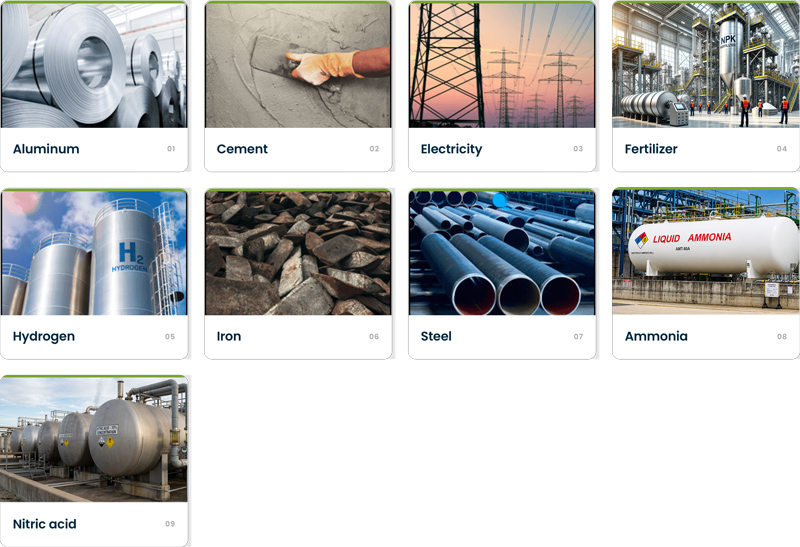
CBAM currently applies to imports of iron and steel, aluminium, cement, fertilisers, hydrogen, ammonia, nitric acid and electricity, together with downstream precursor products.
Where operator-specific emissions data are not available or cannot be verified, default values apply. These default values are intentionally conservative and may result in a higher reported emissions intensity and consequently a higher CBAM cost compared with verified actual emissions.
Why Choose SCS Global Services?
SCS Global Services has been providing independent greenhouse gas (GHG) verification services for more than 15 years across a wide range of industries, including manufacturing, metals, chemicals, energy, agriculture, transportation, and consumer goods. Since 2026, SCS Global Services Europe is preparing its assurance portfolio to include verification under the EU Emissions Trading System (EU ETS) and the Carbon Border Adjustment Mechanism (CBAM).
Our verifiers apply the latest regulatory requirements, monitoring methodologies, and GHG accounting principles to support compliance with both ETS and CBAM obligations.
SCS Global Services Europe B.V. is currently undergoing the accreditation process to become an accredited CBAM verifier.
Our current CBAM accreditation application covers:
- Activity Group IV (AG4) – Fertilisers, including urea and mixed fertilisers.
- Activity Group VIII (AG8) – Iron and steel products and aluminum products;
SCS Global Services also offers RED certification services for renewable fuels. For organizations subject to both CBAM and RED requirements, SCS Global Services can coordinate verification and certification activities to increase overall compliance efficiency.
Independent. Experienced. Globally recognized. SCS Global Services helps organizations navigate CBAM compliance with confidence.
Share Your Feedback
Submit feedback, complaints, or comments here.
- Supplying CBAM Goods to the European Union
- Process
- SCS Global Services CBAM services
The CBAM verification process follows a structured, risk-based approach. The summary below reflects the verification activities in Section 2.2 to Section 2.20 of Annex II to Commission Delegated Regulation (EU) 2025/2551, together with the verification principles in Commission Implementing Regulation (EU) 2025/2546.
-
Pre-contractual review and time allocation
Before accepting an engagement, SCS Global Services reviews the available information to understand the operator’s installation, determine the proposed verification scope, confirm that the engagement falls within the accredited scope, assess competence and resource availability, evaluate verification risks, and allocate sufficient time for the work. The contract must allow for additional time if needed for strategic analysis, risk analysis, or other verification activities.
-
Information request from the operator
Before the strategic analysis and throughout the verification, the operator must provide the information needed to plan and perform the verification. This may include the latest monitoring plan, installation descriptions, process flow information, change records, sampling plans, operator emissions report, previous verification reports, information on unresolved findings, precursor verification reports, production-period evidence, electricity evidence, databases, data sources, and other relevant records.
-
Strategic analysis
SCS Global Services performs a strategic analysis to assess the likely nature, scale, and complexity of the verification. This includes reviewing the installation, goods produced, production processes and routes, source streams, emission sources, technical connections, monitoring methodology, measurement equipment, calculation factors, precursor inputs, electricity data, data flow activities, and the operator’s control system.
-
Risk analysis
SCS Global Services identifies and analyses inherent risks, control activities, and control risks that may affect the reliability of the emissions report. The risk analysis considers the strategic analysis, operator information, relevant source streams and data flows, and applicable materiality levels. If new information becomes available during verification, the risk analysis and planned verification activities are updated.
-
Verification plan
Based on the strategic and risk analyses, SCS Global Services prepares a verification plan proportionate to the risks identified. The plan includes a verification programme, a test plan for control activities and procedures, and a data sampling plan. The plan is designed to reduce verification risk to an acceptable level and support a reasonable assurance opinion.
-
Verification activities
SCS Global Services implements the verification plan and checks whether the monitoring plan has been properly applied. Verification activities include substantive testing, analytical procedures, data verification, and checks on the correct application of the monitoring methodology. SCS Global Services reviews data flow activities, IT systems, control activities, procedures, documentation, and implementation effectiveness.
-
Analytical procedures
SCS Global Services uses analytical procedures to assess plausibility and completeness of reported data. This includes assessing fluctuations and trends, identifying outliers, unexpected data and data gaps, performing preliminary and substantive analytical procedures, and carrying out final analytical procedures to confirm that identified errors have been resolved.
-
Data verification
SCS Global Services performs detailed testing of the data in the operator’s emissions report. This includes tracing data back to primary source records, cross-checking with external or corroborating sources where available, performing reconciliations, checking thresholds, recalculating reported values, and verifying the boundaries of the installation, production processes, production routes, source streams, emission sources, technical connections, activity levels, and data reliability.
-
Verification of monitoring methodology
SCS Global Services checks whether the monitoring methodology in the monitoring plan has been correctly applied. This includes evaluating completeness of data, data gaps, double counting, sampling plans, attribution of emissions and energy flows, activity-level definitions, energy consumption, precursor treatment, use of verified actual emissions for precursors where applicable, default-factor use, electricity emission factors, biomass sustainability evidence, and treatment of transferred CO2 or N2O, carbon capture and storage, and permanent carbon capture and use.
-
Reliance on other verification reports
Where the operator relies on verified data from other installations, such as precursor-producing installations or electricity-producing installations, SCS Global Services checks whether the related verification report was issued by an appropriately accredited verifier, whether the opinion was satisfactory, and whether the report covers the relevant production period.
-
Sampling
SCS Global Services may use sampling methods where justified by the risk analysis. If a misstatement or non-conformity is identified through sampling, SCS Global Services requests the operator to explain the cause, assesses the impact on reported data, determines whether additional verification work is needed, and decides whether the sample size or corrected data population must be expanded.
-
Physical site visit
SCS Global Services conducts a physical site visit at the installation where the goods are produced, unless a virtual site visit or waiver is permitted under the applicable CBAM verification rules. The site visit is used to assess measuring devices and monitoring systems, interview personnel, assess installation and production-process boundaries, confirm the completeness of source streams and emission sources, review technical connections, and gather sufficient evidence for the verification conclusion.
-
Addressing misstatements, non-conformities, and non-compliance
Where SCS Global Services identifies misstatements, non-conformities, or non-compliance during verification, SCS Global Services informs the operator without delay and requests correction. Corrected issues are documented as resolved. For uncorrected issues, SCS Global Services requests explanations, assesses materiality, evaluates impacts on reported embedded emissions and free allocation adjustment information where relevant, and determines the effect on the verification opinion.
-
Independent technical review
Before the verification report is issued, the internal verification documentation and draft verification report are reviewed by an independent reviewer who was not part of the verification team. The review covers the complete verification process, confirms that procedures were correctly followed, assesses whether due professional care and judgement were applied, and evaluates whether the evidence supports a reasonable assurance opinion.
-
Authentication of the verification report
The verification report is authenticated based on the conclusions of the independent reviewer and the evidence in the internal verification documentation. Authentication is performed by a person duly authorized by the verifier.
-
Internal verification documentation
SCS Global Services compiles internal verification documentation sufficient to demonstrate that the verification was performed in accordance with the applicable CBAM requirements. The documentation includes the results of verification activities, information received from the operator, strategic analysis, risk analysis, verification plan, justification for any site-visit waiver or virtual site visit, evidence supporting the verification opinion, and the results of the independent review.
-
Verification report and opinion statement
SCS Global Services issues the verification report only for activity groups within its accredited scope. The verification report includes a verification opinion. The report may be verified as satisfactory only where the operator’s emissions report is free from material misstatements. The report is verified as unsatisfactory where material misstatements, material non-conformities, insufficient clarity, or limitations of scope prevent a satisfactory reasonable assurance conclusion.
-
Limitation of scope
SCS Global Services may conclude that the scope of verification is too limited where data are missing, the monitoring plan does not provide sufficient scope or clarity, or the operator has not made sufficient information available. A limitation of scope may prevent SCS Global Services from obtaining sufficient evidence to issue a reasonable assurance opinion.
-
Outstanding non-material non-conformities
SCS Global Services assesses whether non-material non-conformities identified in the previous reporting period have been corrected. If they have not been corrected, SCS Global Services assesses whether the failure increases, or may increase, the risk of misstatements and documents the status and resolution of findings.
-
Recommendations for improvement — without consultancy
Where SCS Global Services identifies areas for improvement, the verification report may include recommendations related to the operator’s risk assessment, data flow activities, control activities, procedures, and monitoring and reporting process. These recommendations are limited to verification findings and do not constitute consultancy. SCS Global Services remains impartial and does not advise on, design, or develop the operator’s monitoring and reporting process.
-
Facts discovered after issuance of the verification statement
If SCS Global Services becomes aware of facts after issuance of the verification statement that could have materially affected the verification opinion, SCS Global Services assesses the significance of the information, determines whether additional verification activities are required, and takes appropriate action. Depending on the circumstances, this may include communication with the client, amendment, withdrawal or reissuance of the verification statement, and notification of relevant authorities or intended users where required.
Pre-Verification Assessment
Before the formal CBAM verification engagement, SCS Global Services offers a comprehensive Pre-Verification Assessment designed to evaluate your readiness for verification and identify potential issues before they become non-conformities.
The assessment follows the core elements of the CBAM verification process and provides an independent review of your emissions monitoring, calculation methodologies, supporting data, and reporting systems. Instead of issuing a verification opinion, SCS Global Services delivers a detailed gap assessment report highlighting areas requiring correction or improvement before formal verification.
The Pre-Verification Assessment includes:
- Completion of an online CBAM readiness self-assessment
- Review of the Monitoring Methodology and supporting procedures
- Assessment of data availability, traceability, and recordkeeping systems
- Evaluation of emissions calculations and allocation methodologies
- Testing of selected calculations, emission factors, and data flows
- Review of evidence supporting direct and indirect emissions
- Identification of gaps, weaknesses, and potential non-conformities
- Recommendations to improve data quality, completeness, and verification readiness
Upon completion, SCS Global Services provides a Pre-Verification Gap Assessment Report summarizing findings, observations, and recommended corrective actions. No verification opinion or assurance statement is issued as part of this service.
Accredited Third-Party CBAM Verification Services
Once accredited, SCS Global Services Europe will provide independent third-party verification of embedded emissions data in accordance with the CBAM Regulation, applicable implementing legislation, and accreditation requirements.
Our verification services are designed to provide reasonable assurance that reported embedded emissions are free from material misstatement and have been determined in accordance with the applicable CBAM monitoring and calculation methodologies.
The verification engagement includes:
- Independent verification of installation-level embedded emissions data for CBAM-covered goods
- Risk-based verification planning and strategic analysis of the installation and reporting processes
- Evaluation of emissions calculations, source data, controls, and supporting evidence
- Materiality, completeness, and consistency assessments
- On-site or remote verification activities, as applicable
- Identification and resolution of material misstatements and non-conformities
- Independent technical review in accordance with accreditation requirements
- Issuance of a Verification Report and Verification Statement for use by authorized CBAM declarants in support of their annual CBAM declaration
By obtaining accredited third-party verification, non-EU operators can provide their EU customers with confidence in the accuracy and reliability of reported emissions data and support the use of actual embedded emissions values under the CBAM framework.
Request Information
Ready to get started or need more info? Connect with us.